
On March 31, 2024, ISLA hosted its annual virtual Ramadan webinar and fundraiser. This year, ISLA is raising funds for the Teaching Palestine Toolkit. Mashallah, the 2.5 hour event went by fast, as we heard from six inspirational speakers who provided Islamic school educators with lucid and actionable insights and advice.
Nearly 300 people registered for this event with approximately 100 joining us live. Many participants and panelists actively engaged in the chat as they reacted to the inspiring and thought-provoking presentations of the speakers.
Watch the recording, and read on for insights and highlights from the event.
One participant wrote us afterwards and stated:
“I wanted to reach out and say Jazakum Allahu Khair for a eye opening webinar today. It was an honor to listen to giants in our industry speak on such an important topic. “
Another stated:
“Jazāk Allāhu Khayran for such a powerful, rich, uplifting Zoom event. I am honored to be able to attend such an amazing event.”
One simply commented:
“This webinar is on fire!”
The Theme: From Palestine to America: Lessons on Faith, Identity and Perseverance
The theme for this webinar had a dual meaning.
The first attests to all that we have received and learned from our brothers and sisters in Palestine to us here in America. We have all watched innumerable videos of our brothers and sisters in Gaza pronouncing their resolute, unflinching trust in Allah, despite their absolutely dire circumstances. Who has watched these and not had their own faith grow? Who has looked at their resolve and not thought of the stories of patience and perseverance that we read about from the seerah?
Even today, on April 1, 2024, I watched a video of a woman standing amidst the indescribable destruction of the largest medical complex in Gaza, Al-Shifa Hospital, encouraging her brothers and sisters to not lose faith in Allah, for as long as they stand with Allah, Allah will never leave them alone. Bearing witness to these scenes from the comforts of our own homes, it seems unfathomable that people can have such resolute faith admits such horrific trials. Yet – time and time again – our brothers and sisters in Palestine give us this gift… the reminder of what faith in action actually means.
And the second meaning of our theme was a testimony to the courageous and inspiring ways in which brothers and sisters have had to fight oppression and racism in this country, which we must all learn from and implement in our current struggle right now. In particular, we know that many African Americans understood the role of the public school in upholding and perpetuating racist structures that sought to destroy Black children’s futures along with their families. This is why Sr. Clara Muhammad and others tapped into education as a weapon against their oppression and created their own system of schooling that was empowering and led to personal and societal change. What can we learn from them? How can we use their example as we seek to do something about Palestine and other atrocities occurring in our own countries and around the world?
Quranic Introduction

Ibrahim Mustefa
7th grade student at Islah Academy (CA)
Seventh grader, Ibrahim Mustefa at Islah Academy (CA) open the event with recitation of select verses from the Qur’an. ”
˹Imagine˺ how many devotees fought along with their prophets and never faltered despite whatever ˹losses˺ they suffered in the cause of Allah, nor did they weaken or give in! Allah loves those who persevere.And all they said was, “Our Lord! Forgive our sins and excesses, make our steps firm, and grant us victory over the disbelieving people.” So Allah gave them the reward of this world and the excellent reward of the Hereafter. For Allah loves the good-doers.” 3: 146 – 148.
“O believers! Stand firm for justice as witnesses for Allah even if it is against yourselves, your parents, or close relatives. Be they rich or poor, Allah is best to ensure their interests. So do not let your desires cause you to deviate ˹from justice˺. If you distort the testimony or refuse to give it, then ˹know that˺ Allah is certainly All-Aware of what you do.” 4:135
The Inspiring Panelists
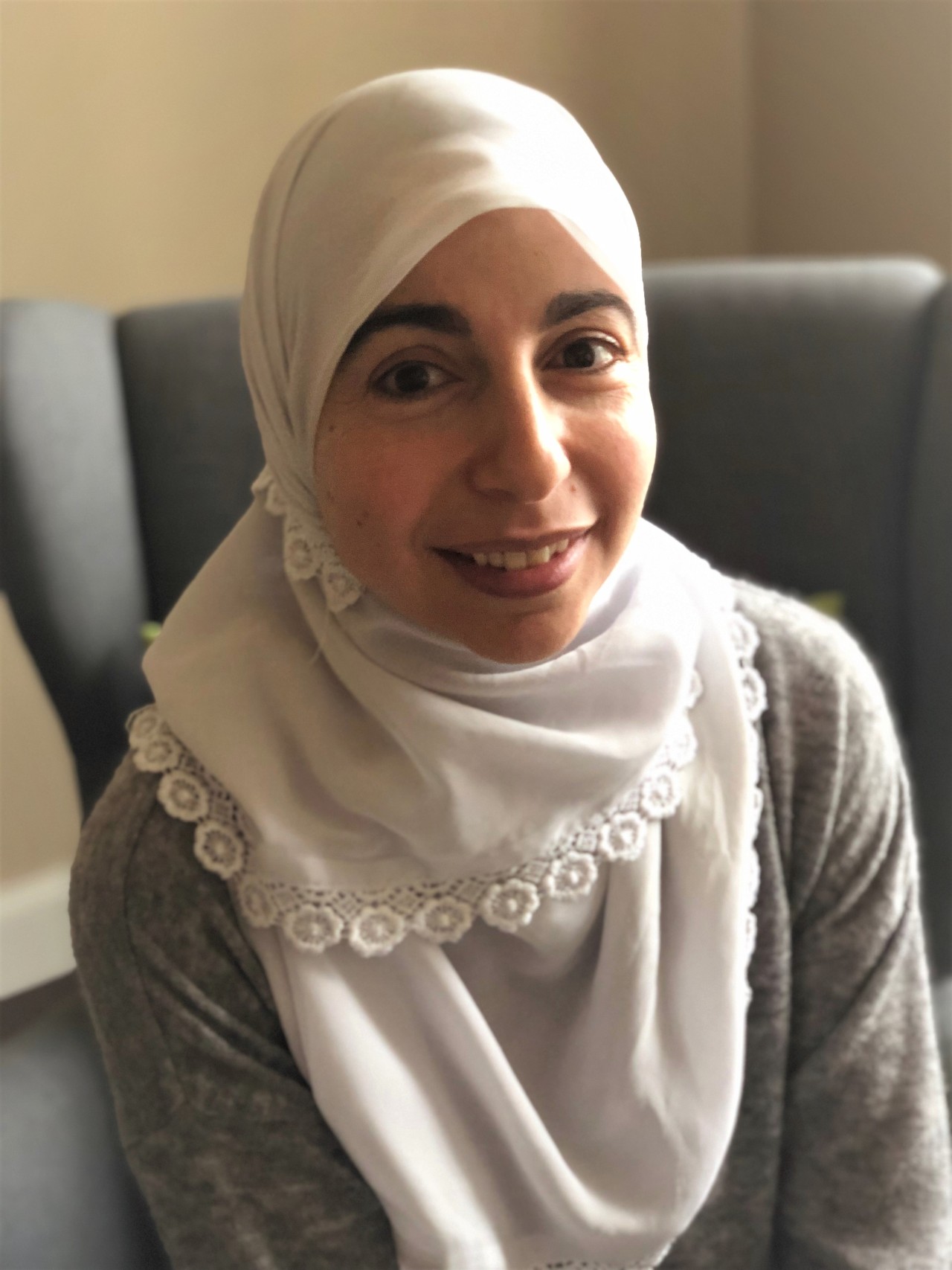
Bahia Amawi, Speech Pathologist and Activist
Sister Bahia Amawi began the webinar with an eye-opening presentation about the content taught about Israel and Palestine in K-12 American textbooks and schools created by the Institute of Curriculum Services (ICS). You can access the slide deck she used here. Bahia also referenced an illuminating podcast which you can listen to here that shares more about the ICS.
Bahia stressed that Islamic schools must invest in the Teaching Palestine Toolkit effort so that we can have reliable, vetted materials that are NOT biased and that are instead based on historical facts, so that our children grow up learning the truth about Palestine and not the propaganda that ICS promotes.
In the chat, Dr. Gholdy Muhammad astutely noted, “This negative indoctrination to our children has been happening since the inception of schools. This is why they control/ban curriculum rather than music or other things that cause white profit/capitalism.” Sister Qur’an Shakir commented, “We have power by developing our own curriculum. We have the responsibility to fight against wrong.”

Imam Tom Facchine, Research Director of Islam and Society at Yaqeen Institute, Teacher at Legacy International Online High School
Following this, Imam Tom Facchine talked about why American Muslims must care about Palestine. He stated that Palestine is a litmus test for all of us. If anyone does not care about what is happening in Palestine, then surely something is wrong with them. For Americans, the fact that our money supports the oppression of Palestinians is another major factor for us to be moved into action.
In addition, Imam Tom stated that Muslims have a duty to push back against secular bias and recommended the book, The Myth of Religious Violence by William Cavanaugh.
Imam Tom pointed out that, ““What we want is justice…Islamic justice… which is not just justice for Muslims…. Which means justice for every Muslim, every Christian, every Jew and every living thing in the earth.”
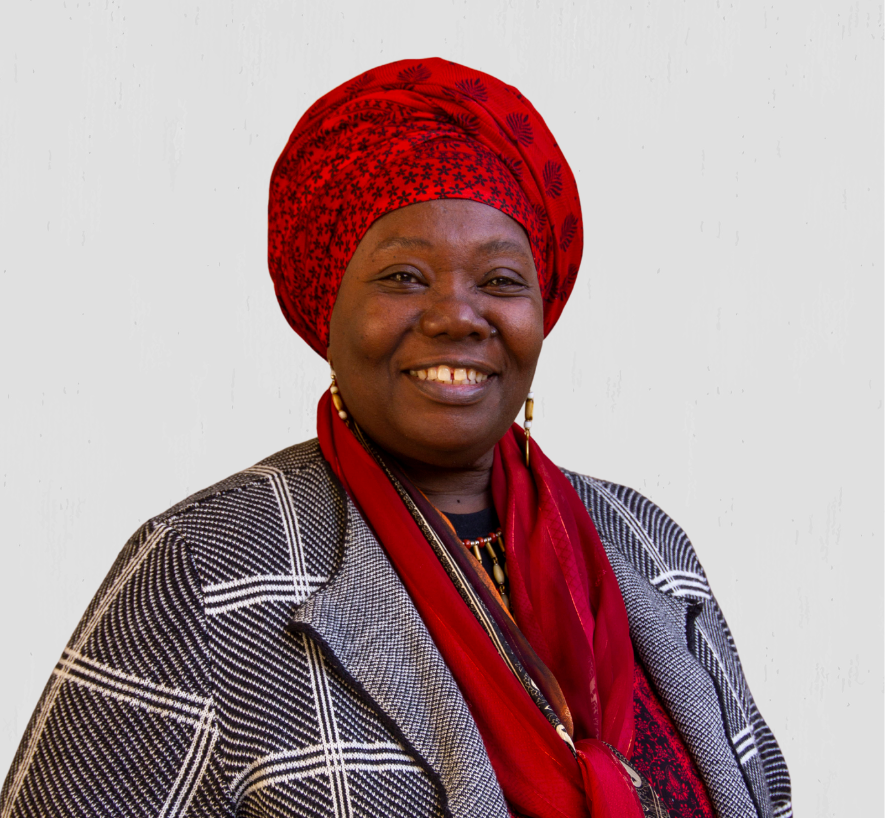
Sister Qur’an Shakir, ISLA Board Member and Clara Muhammad School Network
Sister Qur’an Shakir followed by sharing about the struggles and brilliance of Sister Clara Muhammad. Her presentation helped us all get to know the challenges that Sr. Clara Muhammad was up against in the 1930s in educating her children and that of other Black children. Through her courage and leadership, she established a school system that would help Black children know themselves from a strengths-based perspective, rather than the demeaning narrative projected in public schools. Through Sister Clara Muhammad’s example, we see that it is possible for us to uplift our children, but we must be intentional and craft our own curriculum. Sister Qur’an aptly stated and showed us through her presentation that, “Education can be a tool for self-discovery and liberation.”

Dr. Nadeem Memon, ISLA Board Chair, CITE, Senior Research Fellow, University of South Australia
As the chairperson of the ISLA, Dr. Nadeem Memon talked about what it means for Islamic schools, as a sector, to tap into the unique responsibility and opportunities that are in front of us.
Dr. Nadeem referenced Imam Zaid’s message that Islam does not simply pursue social justice and end there. Instead, we seek social mercy. In this sense, Islamic schools are incubators for this work. And, we must do it all from within an Islamic worldview that includes ways of knowing, being and doing that are all inspired and rooted in Islam.
Dr. Nadeem Memon explained ISLA’s three pillars of: Islamically Grounded, Research Informed, Professional Communities of Practice and how these impact the work that we pursue and do for and with our Islamic school members and organizational partners.

Dr. Muhammad Khalifa, Professor at Ohio State University
Dr. Muhammad Khalifa talked about the single most important person in the school: The school leader. He explained that school leaders have an important responsibility in creating a school culture that is oriented to social justice.
“Justice has to go deeper than… [protesting.] How can we lead with a different example?” Dr. Khalifa pointed out that many of us may be protesting and campaigning against atrocities in Palestine and here in the U.S., but when we go into our schools, we may be engaged in preferring our own ethnic groups. In order to ensure we are authentically and meaningfully leading, we must engage in critical self reflection. This requires you to ask yourself how are you reproducing oppression in your own school? Is it happening? How do you know, i.e. through independently verified data? He provided other steps that leaders should also engage in, including conducting Equity Audits in which you go to the new, the poor, the marginalized groups/people in your school and ask: What’s your experience? What needs to be added? What needs to be done?

Dr. Gholdy Muhammad, Associate Professor at University of Illinois Chicago
Whereas Dr. Khalifa focused on the role of the school leader, Dr. Gholdy Muhammad talked about what teachers can do in helping students engage in criticality so that they are not blindly accepting what is taught to them, or what they see on their screens.
Criticality is one of the elements of Culturally and Historically Responsive Education. In particular, she stated, “Criticality is teaching students to name, question, understand and disrupt any form of hurt, pain and harm in the world. Teaching & learning for social justice and equity.” She explained that criticality helps students understand power, inequality and oppression.
Dr. Gholdy shared a rich teaching resource on Palestine with incredible lesson plans for students across the grade span. Her entire presentation can be found here which include two slides showing how teachers can integrate identity, skills, criticality, intellect and joy when teaching and using books related to Palestine.

Professor Mohamad Abdalla, University of South Australia
Professor Mohamad Abdalla spoke about what makes Palestine a unique issue for Muslims, highlighting its significance as the first qibla, a place were numerous Prophets lived, and historical events such as Isra wal Miraj occurred.
Professor Abdalla stressed that a well-developed curriculum on Palestine “fosters a sense of unity. …creates awareness and responsibility.” If we don’t have such a curriculum, it will be a deeply missed educational opportunity, students will be exposed to bias and misinformation, incomplete information from less reliable resources. He stated, “We cannot afford not to develop a curriculum that addresses this pivotal issue that affects Islam and the entire world.” Finally, he reminded us that we will be accountable to Allah” and this should give us pause and encourage us to support such an effort.

Dr. Samar Al-Majaideh, ISLA Project Manager for Teaching Palestine Toolkit
Finally, Dr. Samar Al-Majaideh provided insight into the vision, mission and components of the Teaching Palestine Toolkit. She began by reminding us of the Hadith that if we see an injustice, we must do something to stop it with our hands, and if not then with our voice, and if that is not possible, the least of faith is to hate it in our hearts.
We have an opportunity to do more by creating the Teaching Palestine Toolkit. Learn more about the Toolkit by looking through the presentation below. Finally, support the effort by donating at this page.
[embeddoc url=”https://theisla.masjidapps.net/wp-content/uploads/2024/04/Teaching-Palestine-Toolkit-Ramadan-1445.pdf”]

